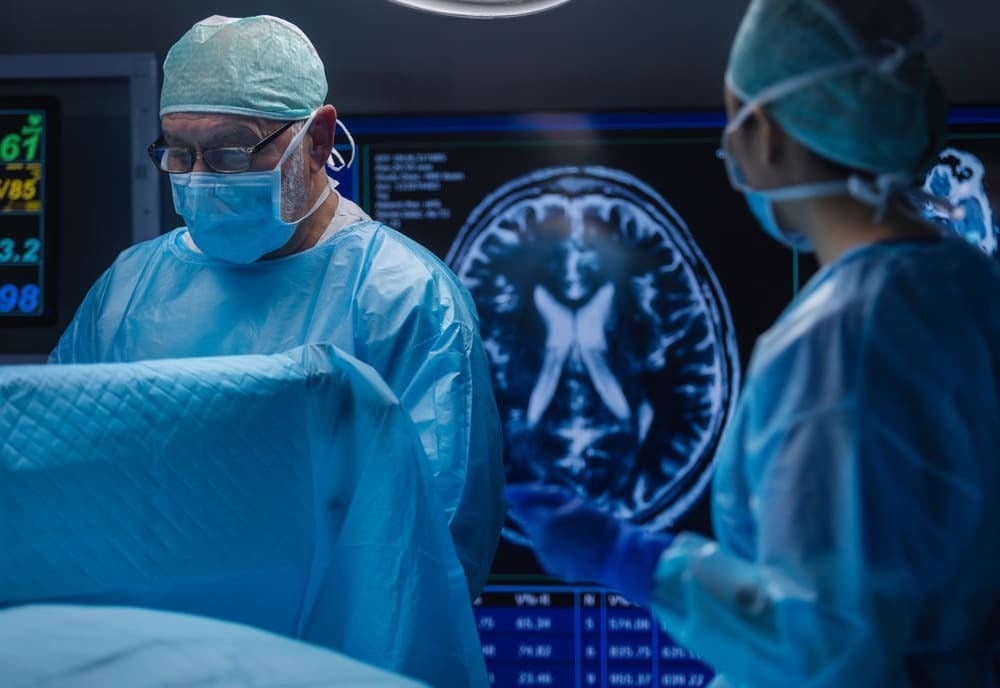
Si tú o un ser querido padecéis la enfermedad de Parkinson, el temblor esencial o la distonía, la cirugía de estimulación cerebral profunda puede ser la decisión terapéutica más importante a la que os enfrentéis.
En Neurodiagnostics Medical P.C., creemos que los pacientes bien informados obtienen mejores resultados. Colaboramos con el mejor neurólogo de Nueva York le coloca en la mejor posición para tomar las decisiones terapéuticas adecuadas. Esta guía le explica cada etapa de la cirugía de estimulación cerebral profunda para que se sienta mejor informado antes de dar el siguiente paso.
¿En qué consiste la cirugía de estimulación cerebral profunda?
La estimulación cerebral profunda (DBS) es una intervención neuroquirúrgica en la que el cirujano implanta electrodos de alambre fino en regiones específicas del cerebro. Dichos electrodos se conectan a un pequeño generador de impulsos implantado cerca de la clavícula, que envía impulsos eléctricos continuos para regular la actividad cerebral anómala.
Según el Instituto Nacional de Trastornos Neurológicos y Accidentes Cerebrovasculares (NINDS), la estimulación cerebral profunda (DBS) está autorizada por la FDA para el tratamiento de la distonía, el temblor esencial, la enfermedad de Parkinson, la epilepsia resistente a la medicación y el TOC. Según Market.us Media, se prevé que la cuota de mercado mundial de la ECP alcance los 3.5 mil millones de dólares en 2033, lo que demuestra cómo este tratamiento sigue ganando popularidad en todas las regiones.
Preparación preoperatoria para la estimulación cerebral profunda (DBS)
Antes de programar la intervención quirúrgica, se le realizará una evaluación exhaustiva. La preparación preoperatoria para la ECP sirve para confirmar que usted es un buen candidato y que los beneficios superan a los riesgos. La evaluación abarcará los siguientes aspectos clave:
- Una evaluación neurológica: Su neurólogo revisará su historial de síntomas y la respuesta a la medicación para identificar la mejor diana cerebral.
- Imágenes cerebrales: Se utilizan resonancias magnéticas o tomografías computarizadas para determinar con precisión el lugar de implantación antes de la intervención quirúrgica.
- Pruebas neuropsicológicas: Las evaluaciones cognitivas se utilizan para descartar afecciones como la demencia que podrían afectar a los resultados.
- Planificación de la medicación: Algunos pacientes reducen la dosis o dejan de tomar determinados medicamentos en los días previos a la intervención.
Cuánto tiempo dura la cirugía de estimulación cerebral profunda
Una de las preguntas más frecuentes que plantean los pacientes es cuánto tiempo dura la intervención quirúrgica de estimulación cerebral profunda. La ECP se lleva a cabo en dos fases, que requieren más de una visita al quirófano.
La primera fase, la implantación de los electrodos, dura entre tres y seis horas por cada lado del cerebro, mientras el paciente permanece despierto. Tal y como explica la explica la Clínica Cleveland, en la segunda fase se implanta el generador de impulsos bajo anestesia general.
Según un estudio revisado por pares, de 21 años de duración, en el que participaron 426 pacientes con ECP, la duración media de la intervención se ha reducido de más de 300 a menos de 200 minutos a medida que ha aumentado la experiencia quirúrgica.
Qué cabe esperar inmediatamente después de una intervención de estimulación cerebral profunda
La recuperación postoperatoria tras una DBS comienza en el hospital, donde la mayoría de los pacientes permanecen entre uno y tres días para su seguimiento, el cuidado de la incisión y la confirmación mediante pruebas de imagen antes del alta. Inmediatamente después de la intervención, es normal que aparezcan hematomas cerca de la zona operada, hinchazón alrededor de los ojos y cierta sensibilidad.
Un estudio a largo plazo publicado en la revista «Journal of Neurology, Neurosurgery, and Psychiatry» reveló complicaciones leves en el 4,2 % de los 262 pacientes sometidos a ECP, con déficits permanentes solo en el 0,4 %.
El proceso de recuperación tras una intervención de estimulación cerebral profunda (DBS)
Establecer expectativas realistas respecto al tratamiento con ECP puede contribuir a fortalecer su proceso de recuperación. El proceso de recuperación tras la cirugía de ECP es gradual. La mayoría de los pacientes retoman actividades ligeras en un plazo de cuatro a seis semanas, aunque la recuperación completa puede tardar hasta seis meses.
Según el Instituto del Cerebro de la OHSU, las puntuaciones motoras de los pacientes tratados con ECP mejoraron un 53 % al cabo de dos años, frente a solo un 4 % en el caso de los pacientes que recibían únicamente medicación. El mismo estudio reveló una mejora del 26 % en la calidad de vida, frente a un deterioro del 1 % en el grupo que solo recibía medicación. Estas mejoras se produjeron a lo largo de dos años completos, por lo que cabe esperar mejoras graduales más que resultados inmediatos.
Muchos pacientes afirman que, tras una programación satisfactoria de la estimulación cerebral profunda (DBS), su dependencia de la medicación se ha reducido, lo que puede mejorar su calidad de vida en general y reducir los efectos secundarios relacionados con los medicamentos a lo largo del tiempo.
Vivir con un dispositivo de estimulación cerebral profunda (DBS): lo que debes saber
Una vez programado, la vida cotidiana con un implante de ECP es fácil de gestionar. Los pacientes reciben un programador para ajustar o apagar el dispositivo cuando sea necesario. Ten en cuenta estas consideraciones de forma continua:
- Duración de la batería: Los generadores no recargables deben sustituirse cada tres o cinco años; los modelos recargables duran bastante más.
- Restricciones relativas a la resonancia magnética: No todos los equipos de resonancia magnética son compatibles con la ECP; informe siempre a los nuevos profesionales sanitarios de que lleva un implante.
- Pautas de actividad: Se deben evitar los deportes de contacto; tu equipo médico te proporcionará orientación personalizada.
¿Buscas un neurólogo en Nueva York?
La cirugía de estimulación cerebral profunda puede ofrecer una mejoría duradera. En Neurodiagnostics Medical P.C., atendemos a pacientes de Brooklyn, el Bronx, Staten Island, Queens, Manhattan y Long Island, centrándonos en el tratamiento de afecciones neurológicas.
Obtén más información en nuestro recurso sobre la estimulación cerebral profunda o llámanos para concertar una consulta. Nuestros médicos aceptan la mayoría de los planes de seguro, incluidos los de indemnización por accidente laboral, los de responsabilidad civil sin culpa y los de PIP (protección contra lesiones personales). Es posible que haya citas disponibles para el mismo día.
Si desea hablar con un neurólogo de Nueva York sobre la cirugía de estimulación cerebral profunda, llame a Neurodiagnostics Medical P.C. al (347) 602-9530 para dar los primeros pasos.
Preguntas frecuentes sobre la cirugía de estimulación cerebral profunda
A continuación se ofrecen las respuestas a las preguntas más frecuentes de los pacientes sobre la cirugía de estimulación cerebral profunda.
¿Quién es un buen candidato para someterse a una intervención de estimulación cerebral profunda?
Los pacientes con más probabilidades de beneficiarse de la cirugía de estimulación cerebral profunda son aquellos a los que se les ha diagnosticado la enfermedad de Parkinson, el temblor esencial o la distonía, y cuya afección ha dejado de responder adecuadamente a la medicación. Según el NINDS, la idoneidad para la cirugía también depende del estado de salud general y de la capacidad para someterse a un proceso de implantación por fases.
¿Es peligrosa la cirugía de estimulación cerebral profunda?
La cirugía de estimulación cerebral profunda se considera relativamente segura en los centros con gran volumen de pacientes. Un estudio a largo plazo publicado en la revista «Journal of Neurology, Neurosurgery, and Psychiatry» reveló déficits neurológicos permanentes en solo el 0,4 % de los 262 pacientes.
¿Cura la cirugía de estimulación cerebral profunda la enfermedad de Parkinson?
La cirugía de estimulación cerebral profunda no cura la enfermedad de Parkinson. Según el NINDS, la ECP controla los síntomas, pero no frena la neurodegeneración, aunque puede reducir los temblores y permitir a los pacientes reducir las dosis de medicación.
¿Cuánto tiempo dura un dispositivo de estimulación cerebral profunda?
La duración de la batería de un dispositivo de estimulación cerebral profunda varía según el modelo. Los generadores de impulsos no recargables suelen requerir una sustitución quirúrgica en un plazo de tres a cinco años, mientras que las versiones recargables pueden funcionar durante nueve años o más con una recarga periódica. Tu equipo médico te orientará para que elijas la opción que mejor se adapte a tus necesidades terapéuticas.